
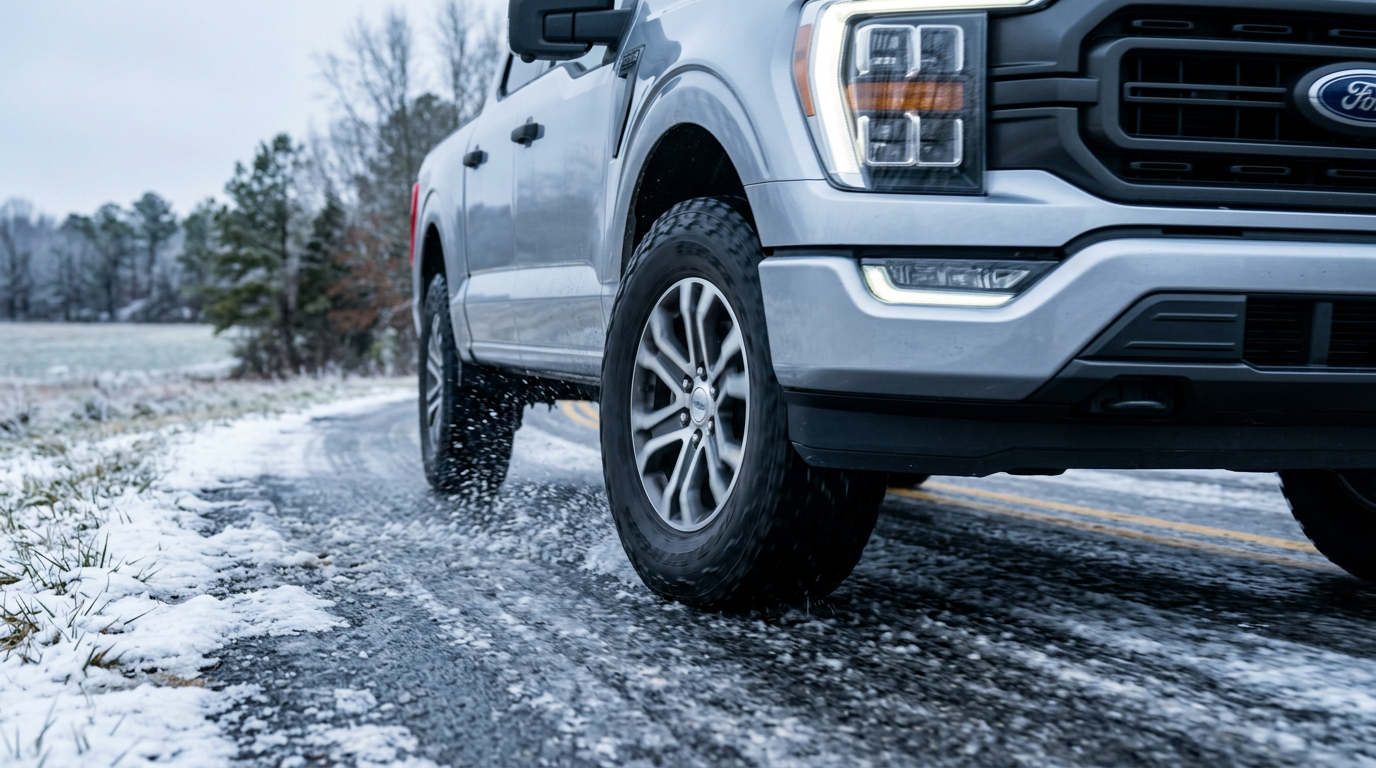
For safe winter driving across the Piedmont Triad, tires need a minimum tread depth of 4/32 inch to maintain wet-weather grip and prevent hydroplaning on slick roads. Tire pressure should be set to the manufacturer's recommendation on your vehicle's driver door placard—not the maximum pressure printed on the tire sidewall—and checked frequently because cold air causes pressure to drop by roughly 1 psi for every 10°F decrease in ambient temperature.
Maintaining proper tire depth and inflation directly impacts how your vehicle accelerates, turns, and stops when seasonal temperatures drop. As autumn transitions to winter, compressed cold air reduces internal tire volume even without a mechanical leak. Driving on underinflated tires increases rolling resistance, uneven tread wear, and fuel consumption, while also reducing the tire's ability to channel away standing water during heavy seasonal rainstorms.
Checking your tire tread depth takes only a moment using standard depth gauges or simple coin tests. Inserting a quarter head-first into your tread grooves provides a quick visual benchmark: if the top of Washington's head is covered by the tread, your tires have at least 4/32 inch of depth remaining. If the tread reaches only the top of Lincoln's head on a penny, your tires are down to 2/32 inch and require immediate replacement. Drivers navigating rolling hills and commercial routes around High Point frequently encounter sudden downpours and icy morning patches where adequate tread depth makes the difference between maintaining traction and skidding.
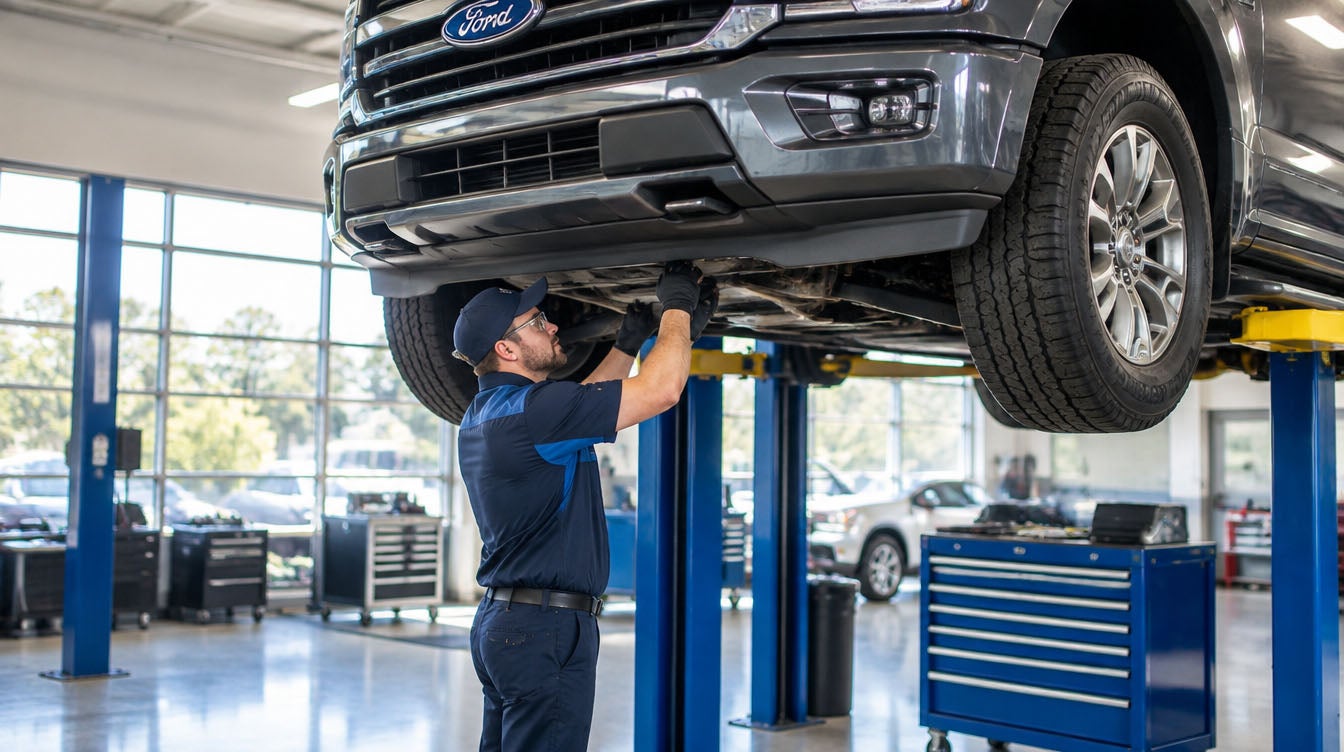
Our technicians perform comprehensive tire checks, precision pressure adjustments, and tire rotations to keep your vehicle balanced for winter driving. If your vehicle requires a new set of tires or a seasonal alignment, stop by our West Wendover Avenue dealership or give our service department a call at (336) 292-8310 to speak with a technician today.
Table of Contents
- Do All-Weather Tires Perform Better Than Standard All-Season Tires in Winter?
- What Coolant Ratio and Replacement Schedule Protect Your Engine Block?
- Why Are Battery Checks and Brake Inspections Vital Before Cold Weather Hits?
- What Local Weather Patterns Make Fall Vehicle Prep Crucial for Drivers?
- Common Fall and Winter Maintenance Questions from Drivers
- Schedule Your Seasonal Maintenance at Green Ford
Do All-Weather Tires Perform Better Than Standard All-Season Tires in Winter?
All-weather tires deliver significantly better traction in cold slush, light snow, and sub-40°F temperatures than standard all-season tires because they feature specialized rubber compounds that stay flexible in freezing weather and carry the Three-Peak Mountain Snowflake (3PMSF) rating. While standard all-season tires are engineered primarily for warm and mild conditions, their tread compound hardens when temperatures drop below 45°F, reducing grip even on clear, dry roads.
The primary difference between these tire categories comes down to rubber chemistry and tread geometry:
- Standard All-Season Tires: Designed for broad durability and quiet operation in spring, summer, and fall. The tread compound stiffens in freezing cold, which lengthens braking distances on cold asphalt.
- All-Weather Tires: Built with advanced silica-rich compounds that remain pliable in below-freezing conditions. They combine deep circumferential grooves with high-density siping to bite into slush and light snow without wearing down prematurely during warm summer driving.
- Dedicated Winter Tires: Formulated strictly for deep snow and severe ice. While highly effective in sub-zero climates, dedicated winter tires require seasonal removal and storage when temperatures rise in spring.
For drivers in our region, all-weather tires offer an ideal year-round solution. You gain true cold-weather emergency stopping power without the burden of storing a second set of wheels or visiting a shop twice a year for seasonal changeouts.
Pairing all-weather tires with intelligent drivetrain technology enhances winter capability even further. Advanced SUV models like the 2026 Ford Explorer equipped with Four-wheel drive and the Terrain Management System™ or the compact 2026 Ford Escape featuring All-wheel drive automatically distribute torque to the wheels with the most grip. For rugged off-road versatility combined with severe weather readiness, explore our new Ford Bronco inventory to see models built with selectable drive modes designed for challenging road conditions.
What Coolant Ratio and Replacement Schedule Protect Your Engine Block?
A 50/50 mixture of engine antifreeze and distilled water provides complete freeze protection down to -34°F while preventing cooling system corrosion and boil-overs. Coolant should be flushed and replaced every 30,000 miles or two years for standard formulas, while extended-life formulas can protect your engine for up to 5 years or 150,000 miles depending on manufacturer guidelines.
Engine coolant does far more than just transfer heat during summer driving; it acts as an essential anti-freeze solution when winter frost sets in. If a cooling system contains too much plain water or diluted fluid, that liquid can freeze inside the radiator core and engine block. Freezing water expands with immense force, which can crack cast-iron or aluminum engine blocks, rupture radiator seams, and split heater core hoses.
Maintaining proper fluid chemistry requires specific care during autumn service prep:
- Test Freeze Protection: Technicians use a hydrometer or refractometer to verify that your coolant strength maintains the proper chemical concentration.
- Inspect System Integrity: Radiator caps, thermostat housings, and water pumps are inspected for microscopic leaks or mineral crust buildup.
- Avoid Chemical Incompatibility: Coolant types and colors should never be mixed haphazardly. Blending incompatible Organic Acid Technology (OAT) and Hybrid Organic Acid Technology (HOAT) formulas causes chemical reactions that form gel deposits, plugging narrow cooling passages inside your engine.
Keeping your cooling system sealed with factory-specified fluids prevents costly mechanical damage during unexpected cold snaps. If your vehicle needs a top-off or fluid replacement, our genuine Ford parts center stocks OEM-approved engine coolants and replacement hoses built specifically for your powertrain.
Why Are Battery Checks and Brake Inspections Vital Before Cold Weather Hits?
Cold temperatures reduce a car battery's chemical reaction speed and electrical output by up to 50 percent while simultaneously increasing engine cranking resistance due to thickened oil. Inspecting your battery and brake system before winter ensures your vehicle starts reliably on freezing mornings and stops predictably on slick pavement.
Automotive batteries three years or older are especially vulnerable to sudden failure when the first hard frost arrives. Cold weather forces your vehicle's electrical system to work harder to power seat warmers, windshield defrosters, headlights, and cabin heaters. A professional battery test measures cold cranking amps (CCA) and internal resistance, identifying a weak cell before it leaves you stranded in your driveway. Cleaning corrosion off battery terminals and inspecting cables ensures full voltage reaches the starter motor.
Simultaneously, winter driving places extra demands on your vehicle's braking system:
- Braking Distance Expansion: Stopping distances on wet or icy roads can double or triple compared to dry summer asphalt, making crisp brake response critical.
- Component Wear Indicators: Squeal shims, thin friction pads, or scored rotors reduce braking efficiency and generate uneven clamping force during emergency stops.
- Hydraulic Line Integrity: Moisture absorbed by aging brake fluid can freeze or form air bubbles under severe fluid heat, leading to a spongy brake pedal feel.
Heavy-duty vehicles like the 2026 Ford F-150 powered by the 3.5L engine rely on fully functional mechanical brakes and integrated electronic brake control systems when hauling gear or towing trailers in inclement weather. To ensure your vehicle's stopping system and electrical grid are ready for winter, schedule a service appointment online with our certified maintenance team.
What Local Weather Patterns Make Fall Vehicle Prep Crucial for Drivers?
Piedmont Triad weather shifts rapidly between mild autumn afternoons and freezing nighttime temperatures, creating morning frost, dense fog, and slick bridge decks across regional corridors. Preparing your vehicle during fall guarantees clear visibility, proper fluid operation, and maximum road traction before unpredictable winter weather arrives.
While our region rarely sees prolonged blizzards, local winter climate patterns create unique challenges for daily driving. High humidity combined with sudden overnight temperature drops creates black ice on highway overpasses and tree-shaded secondary roads. Suburban drivers commuting along Muddy Creek Greenway corridors and open bypasses near Kernersville often encounter lingering patches of frost on shaded asphalt long after sunrise.
A complete fall preparation checklist addresses all vehicle systems affected by seasonal swings:
- Windshield Wipers and Washer Fluid: Summer heat breaks down wiper blade rubber, causing streaking and chattering. Replacing worn blades and refilling the reservoir with sub-freezing washer fluid keeps your windshield clear of road spray and ice.
- Heating and Defroster Systems: Verifying that your climate control system directs air properly through defroster vents prevents fogged cabin glass during chilly morning starts.
- Lighting Systems: Shorter daylight hours demand fully functional halogen or LED headlights, brake lights, and turn signals so you can see clear of obstruction and remain visible to other motorists.
Commercial operators managing delivery vans or work trucks must be especially vigilant regarding pre-winter fleet readiness to avoid costly downtime. If you manage work vehicles for your business, explore our commercial Ford fleet inventory to see durable trucks and cargo vans equipped with modern safety features and heavy-duty winter packages.
Common Fall and Winter Maintenance Questions from Drivers
Q: How often should windshield wiper blades and washer fluid be changed for winter?
Wiper blades should generally be replaced every six to twelve months, or immediately if they leave streaks, skip across the glass, or show cracked rubber edges. Before freezing weather arrives, replace summer washer fluid with a sub-freezing formula rated down to -20°F or lower. Summer washer fluids contain water-heavy mixtures that can freeze inside the washer reservoir, cracking the fluid tank or bursting the washer fluid pumps when temperatures drop.
Q: Does cold weather cause my tire pressure monitoring system (TPMS) light to come on unexpectedly?
Yes, cold ambient temperatures often trigger the TPMS warning light on crisp autumn mornings. Because air contracts when cooled, your tire pressure drops by approximately 1 psi for every 10°F decrease in outside air temperature. If your tires were inflated right at the minimum threshold during warm weather, a 20-degree drop overnight can lower internal pressure enough to trip the dashboard sensor. Checking pressure when tires are cold and topping them off resolves the warning light.
Q: Should I warm up my engine for several minutes before driving in cold weather?
Modern fuel-injected engines do not require lengthy idling periods in cold weather. Driving gently after 30 to 60 seconds of idling warms up the engine, transmission, and differential fluids much faster and more efficiently than idling stationary in a driveway. Extended idling wastes fuel, increases engine emissions, and allows unburned fuel to dilute engine oil. Gentle acceleration for the first few miles gives all mechanical components time to reach operating temperature safely.
Q: What items should I keep in a winter emergency kit inside my vehicle?
A complete vehicle winter emergency kit should include an ice scraper with a snow brush, heavy-duty jumper cables, a digital tire pressure gauge, a bright LED flashlight with extra batteries, a warm blanket, work gloves, a first-aid kit, and non-perishable snacks with bottled water. Adding a small bag of sand or cat litter provides instant traction if your tires slip on patch ice in a parking lot.
Q: What does a seasonal fall and winter multi-point inspection include at Green Ford?
Our factory-trained technicians perform a comprehensive inspection of all critical vehicle components during a seasonal maintenance visit. We test battery health and charging output, check engine coolant freeze points, measure tire tread depth and inflation pressure, inspect brake pads and rotors, check steering and suspension components, examine belt and hose integrity, and verify proper operation of all exterior lights, wipers, and heating systems.
Schedule Your Seasonal Maintenance at Green Ford
Staying ahead of seasonal vehicle maintenance protects your family, improves fuel efficiency, and prevents unexpected roadside breakdowns during winter weather. Whether you need a fresh set of all-weather tires, a cooling system flush, or a routine battery test, our certified technicians are ready to deliver fast, friendly care using genuine OEM parts.
If you are considering upgrading your daily drive before winter arrives, check out our new Ford vehicle specials for current offers on tech-smart, all-wheel drive models. Visit our service center at our Greensboro location or call our friendly team directly at (336) 292-8310 to reserve your seasonal maintenance appointment today. If your vehicle ever experiences an unexpected breakdown on the road, remember that manufacturer-backed Ford Roadside Assistance at (800) 241-3673 provides 24/7 emergency support, towing, and flat tire changes to keep you safe wherever your journey leads.
© 2026 Green Ford. All rights reserved.