
Blog

2027 Kia Sportage: The Versatile SUV for Rural Ohio Families

magnific_2027-kia-sportage-compact-suv_ksVafnt16B

The 2027 Kia Sportage is the right choice for families and working households who need a capable, comfortable, and connected compact SUV for daily driving, weekend outdoor adventures, and hauling gear across rolling rural terrain. With available all-wheel drive, a spacious cargo area, a suite of standard driver assistance technology, and Kia's well-regarded warranty coverage, the Sportage delivers genuine versatility at a mid-range price point that fits real family budgets.
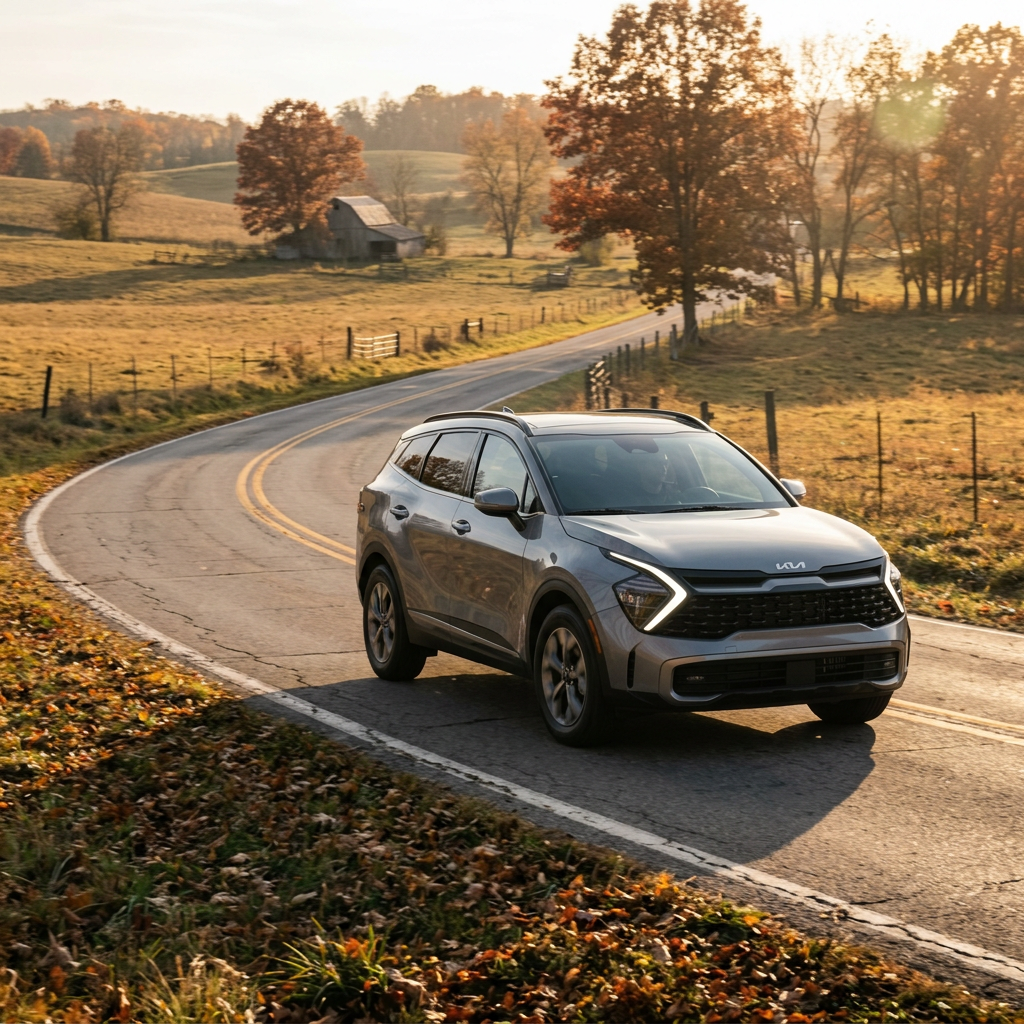
Silver Kia Sportage driving along a winding asphalt country road during autumn golden hour. (Representative image for illustration purposes only. Actual vehicle may vary based on trim and configuration.)

Table of Contents

How Efficient and Capable Is the 2027 Kia Sportage for Salisbury Township Drivers?

The 2027 Kia Sportage is engineered to balance fuel efficiency with the kind of all-weather, all-terrain capability that rural driving demands. For households navigating the rolling hills and river valleys around Salisbury Township, that balance matters every single day.

Kia continues to offer the Sportage in both a conventional turbocharged gasoline powertrain and a fuel-sipping hybrid configuration, giving buyers a meaningful choice based on their commuting patterns and driving habits. The hybrid variant is particularly well-suited to drivers who cover longer distances between small towns and local businesses, where stretching every gallon makes a measurable difference over the course of a month. The conventional turbocharged engine, meanwhile, delivers responsive power for hill climbs, loaded cargo runs, and the occasional unpaved farm lane.

All-wheel drive is available across multiple trim levels, providing added traction confidence on wet gravel roads, muddy pasture tracks, and the kind of frost-heaved pavement that southeastern Ohio winters regularly produce. That capability, paired with meaningful ground clearance, means the Sportage handles the realities of rural life rather than just the smooth commuter corridors most compact SUVs are designed around.

Shoppers ready to explore specific configurations can browse available new Sportage EX models in Herrnstein Kia's current inventory to see what's in stock and ready to drive.

Exterior Styling of the 2027 Kia Sportage Tailored for Outdoor Life

The 2027 Kia Sportage carries forward Kia's bold "Opposites United" design philosophy, presenting a crossover that looks purposeful rather than merely fashionable. The exterior features a wide, sculpted hood, a distinctive front fascia with Kia's signature tiger-nose grille, and sharp LED lighting elements that give the Sportage a confident road presence whether it's parked outside a farm supply store or pulling up to a trailhead.

Body lines are clean and taut, with flared wheel arches that hint at the available all-wheel-drive capability underneath. Higher trim levels add roof rails that are genuinely useful for carrying kayaks, cargo boxes, or gear for a weekend on the water. The overall silhouette is tall enough to offer good outward visibility on winding country roads, yet aerodynamically shaped to avoid the fuel penalty that boxier SUVs carry.

Color choices across the Sportage lineup typically include both understated neutrals and more expressive tones, giving buyers the flexibility to choose a look that reflects their personality. Buyers who prefer a pre-owned Sportage or another Kia model can also browse Herrnstein Kia's pre-owned vehicle inventory for additional options.

The Sportage's exterior proportions strike a practical balance: large enough to feel substantial on rural highways, compact enough to maneuver through tight farm lanes and small-town parking lots without stress.

Powertrain Performance and Towing Capacity of the 2027 Kia Sportage for Rural Adventures

The 2027 Kia Sportage gives buyers a genuine choice of powertrains, each suited to a different set of priorities. The standard turbocharged four-cylinder engine delivers confident acceleration and enough low-end torque to handle loaded cargo runs and sustained hill climbs without laboring. A hybrid powertrain option adds electric motor assistance to improve fuel economy, particularly useful during the stop-and-go portions of mixed rural and town driving.

For buyers who need to tow a small trailer, a fishing boat, or a utility trailer loaded with farm equipment, the Sportage offers a towing capacity that handles light-duty hauling tasks. While it is not a heavy-duty truck replacement, it is entirely capable of towing the kinds of loads that rural families in southeastern Ohio regularly move: small watercraft, utility trailers, and recreational equipment.

All-wheel drive models distribute power between the front and rear axles automatically, reacting to traction conditions without requiring driver input. That system is particularly valuable on the gravel back roads around Salisbury Township, where surface conditions can change quickly between dry gravel, wet clay, and muddy ruts after a rain.

Transmission options are smooth and well-matched to both powertrains, with paddle shifters available on higher trims for drivers who want more direct control on descending grades. Keeping the Sportage's drivetrain in peak condition is straightforward at Herrnstein Kia, where you can easily book a service appointment with factory-trained technicians who know this vehicle inside and out.

Interior Comfort and Space in the 2027 Kia Sportage Designed for Families

Step inside the 2027 Kia Sportage and the cabin immediately communicates that Kia has prioritized practical comfort over visual drama. The seating position is elevated enough to give a commanding view of the road ahead, which is particularly welcome on the winding two-lane routes that connect small communities in southeastern Ohio.

Rear passenger space is genuinely generous for a compact SUV, with enough legroom that adults sit comfortably on longer drives rather than folding themselves into the back seat. The rear bench folds in a split configuration, allowing families to carry both passengers and cargo simultaneously. That flexibility proves its value on a Saturday morning when the back seat needs to hold two kids on the way to the river and fishing gear on the way home.

Cabin materials step up noticeably as trims ascend the lineup, moving from durable cloth upholstery at entry levels to soft-touch surfaces and available leather seating at higher grades. Climate control is standard across the range, with dual-zone automatic climate control available to keep front and rear passengers comfortable regardless of the season. Heated front seats are available for cold Ohio mornings, and ventilated seats appear on upper trims for summer comfort.

Storage throughout the cabin is thoughtful, with a deep center console, door pockets sized for water bottles and maps, and a useful under-seat storage area in some configurations. Families trading in a current vehicle can get an estimate on their trade-in value at Herrnstein Kia before visiting the showroom.

Infotainment Features That Enhance Connectivity for 2027 Kia Sportage Owners

The 2027 Kia Sportage centers its technology experience around a large, responsive touchscreen display that serves as the hub for navigation, audio, and connected services. The interface is intuitive enough that drivers can find what they need without taking their eyes off the road for more than a glance, which matters on roads where deer crossings and sharp curves demand attention.

Wireless Apple CarPlay and Android Auto integration are available, allowing drivers to mirror their smartphone's navigation and music apps without plugging in a cable. That feature is particularly practical for drivers navigating between small towns and historic sites where cellular signal can be inconsistent and a locally cached map makes a real difference.

Available features across the trim lineup include a premium audio system, a head-up display that projects speed and navigation prompts onto the windshield, and Kia Connect services that allow remote vehicle monitoring, remote start, and over-the-air updates. A USB charging network throughout the cabin keeps devices powered during longer drives.

Buyers who are ready to move forward with a purchase can submit a credit application online through Herrnstein Kia before stepping into the dealership, streamlining the buying process considerably.

Safety Technologies in the 2027 Kia Sportage Built for Peace of Mind on the Road

The 2027 Kia Sportage comes standard with a comprehensive suite of driver assistance technologies that provide meaningful protection on rural roads where hazards appear quickly and reaction time is limited. Forward collision avoidance with pedestrian and cyclist detection, lane keeping assist, lane departure warning, and driver attention warning are all part of the standard safety package across the Sportage lineup.

Blind-spot collision warning is particularly valuable on rural two-lane highways where passing maneuvers require confidence in what's alongside the vehicle. Rear cross-traffic alert adds a second layer of protection when backing out of farm driveways or busy parking areas where sightlines are obstructed.

Higher trim levels add features such as a surround-view monitor, a blind-spot view monitor that displays a camera feed in the instrument cluster when a turn signal is activated, and highway driving assist that combines adaptive cruise control with lane centering for reduced fatigue on longer interstate stretches.

The Sportage's structural engineering complements its electronic safety systems, with a high-strength steel body designed to manage crash energy effectively. Genuine Kia replacement components are available directly through Herrnstein Kia's parts department for owners who need to order OEM parts for repairs or maintenance.

2027 Kia Sportage Trim Pricing and Warranty Details

The 2027 Kia Sportage is offered across a well-structured trim ladder that allows buyers to choose a configuration matched to their budget and feature priorities without overpaying for equipment they will not use.

The lineup typically begins with an entry-level LX trim that covers the fundamentals: turbocharged engine, standard safety technology, and a usable infotainment system. The EX trim adds meaningful upgrades including a larger touchscreen, additional driver assistance features, and comfort enhancements that most families will appreciate daily. The SX and SX Prestige trims step into premium territory with leather seating, a panoramic sunroof, upgraded audio, and the full complement of available driver assistance technology. The X-Line and X-Pro variants add a more rugged exterior treatment and additional all-terrain capability for buyers whose weekends regularly take them off paved roads.

A plug-in hybrid ( PHEV) variant rounds out the lineup for buyers who want the option of short-distance electric driving combined with the full range of a conventional hybrid for longer trips.

Kia's warranty coverage is one of the most competitive in the industry. The Sportage is backed by a 5-year/60,000-mile basic warranty, a 10-year/100,000-mile powertrain warranty, and a 5-year/100,000-mile roadside assistance program that provides genuine peace of mind for rural drivers who may be far from the nearest service center. Kia's roadside assistance program is manufacturer-backed, meaning any service dispatched under that coverage meets Kia's own quality standards.

Pricing for the 2027 model year had not been officially published at the time this article was prepared. Contact Herrnstein Kia directly for current MSRP figures and available configurations.

Frequently Asked Questions About Owning a 2027 Kia Sportage

Q: Is all-wheel drive standard on the 2027 Kia Sportage?

All-wheel drive is available on the 2027 Kia Sportage but is not standard on every trim. Front-wheel drive is the base configuration on entry-level trims, with AWD offered as an upgrade or standard on higher grades. For buyers in southeastern Ohio who regularly navigate gravel roads, wet hills, or muddy farm lanes, specifying AWD is a worthwhile investment. Contact Herrnstein Kia at (740) 773-2220 to confirm which trims include AWD as standard versus optional equipment on current inventory.

Q: Does the 2027 Kia Sportage come in a hybrid version?

Yes. Kia offers the Sportage in both a standard turbocharged gasoline configuration and a hybrid variant, with a plug-in hybrid also available. The hybrid is well-suited to buyers who want improved fuel economy on mixed rural and highway driving without sacrificing cargo space or passenger room. The PHEV adds the ability to cover short daily distances on electric power alone, which can meaningfully reduce fuel costs for drivers with predictable commuting patterns.

Q: What is the Kia warranty on the 2027 Sportage?

The 2027 Kia Sportage is covered by a 5-year/60,000-mile basic warranty and a 10-year/100,000-mile powertrain warranty, among the strongest coverage packages in the compact SUV segment. Kia's roadside assistance program extends to 5 years/100,000 miles, providing manufacturer-backed emergency support. For service needs, Herrnstein Kia's factory-trained technicians are the best resource for maintaining that warranty coverage properly.

Q: How practical is the Sportage for hauling outdoor gear and family cargo?

The Sportage's rear cargo area is one of its strongest practical arguments. With the rear seats folded, the cargo floor opens into a flat, usable space capable of handling fishing rods, hiking packs, coolers, and gear for a full family weekend. The split-folding rear bench allows a combination of passengers and cargo simultaneously, so a family of four does not have to choose between bringing people and bringing equipment.

Q: Where can I see and test drive a 2027 Kia Sportage near Chillicothe?

Herrnstein Kia carries the 2027 Kia Sportage at 133 Marietta Rd, Chillicothe, OH 45601. You can find directions to our showroom online, or give the team a quick call to confirm availability and schedule a test drive at a time that works for your schedule. Customers like George Gilbert have described Herrnstein Kia as "the best dealership I have ever dealt with, top notch service," and the sales team is ready to match that standard for every Sportage shopper.


© 2026 Herrnstein Kia. All rights reserved.
Recommended Posts

magnific__a-realistic-professional-photograph-of-a-2025-ford

Which Ford Pickup Truck Is Best for Towing?

For ultimate heavy-duty trailering, the Ford Super Duty F-450 leads the lineup with up to 40,000 lbs of maximum towing capacity, while the Ford F-150 stands out as the best overall light-duty towing pickup with a maximum conventional towing capacity of 13,500 lbs when properly equipped with the available 3.5L EcoBoost V6 engine. Choosing the ideal pickup depends on the weight of your trailer, hitch type, and whether you require commercial-grade hauling power or everyday versatility. Light-duty truck buyers seeking a balance between daily drivability and trailering muscle consistently find the Ford F-150 to be the most adaptable choice. When optioned with the Max Trailer Tow Package, an upgraded rear axle ratio, and the twin-turbocharged 3.5L EcoBoost V6, the Ford F-150 handles large ski boats, multi-car trailers, and heavy travel trailers with ease. For drivers who prioritize fuel efficiency alongside trailering capability, the 3.5L PowerBoost Full Hybrid V6 configuration delivers a stout 11,600 lbs towing capacity while providing mobile electric power for tools or equipment. When your trailering requirements exceed half-ton limits, stepping up to the Ford Super Duty family unlocks serious commercial capability. The Ford F-250 and Ford F-350 utilize high-strength steel frames, heavy-duty solid axles, and available high-output turbodiesel engines designed to tow massive gooseneck and fifth-wheel trailers smoothly across long distances. For lighter recreational setups or city-friendly driving, compact and midsize options round out the truck family. The midsize Ford Ranger delivers up to 7,500 lbs of towing capability, making it ideal for small campers or utility trailers, while the compact Ford Maverick handles up to 4,000 lbs when equipped with the available 4K Tow Package. If you want to compare tow ratings in person or map out a route for a test drive, our team is located conveniently on West Wendover Avenue. You can easily check our showroom location and driving directions before stopping by, or give our sales specialists a direct call at (336) 292-8310 to talk through your specific trailer setup. Table of Contents What Is the Towing Capacity and Payload Range Across Ford Trucks? What Engines, Specs, and Hybrid Powertrains Power the Ford F-150? Which Ford SUV Models Offer Three-Row Seating and Hybrid Options? Common Questions About Ford Models, Pricing, and Towing Specs Explore the New Ford Lineup and Test Drive Today What Is the Towing Capacity and Payload Range Across Ford Trucks? The towing capacity across Ford pickup trucks ranges from 2,000 lbs on standard compact models up to 40,000 lbs on heavy-duty commercial configurations, while maximum payload ratings span from 1,500 lbs to over 8,000 lbs depending on chassis and cab setup. Matching your cargo and trailer weights to the correct chassis ensures safe, comfortable travel whether you haul work materials or weekend gear. At the entry point of the truck lineup, the compact Ford Maverick comes standard with a 2,000 lbs towing rating, which expands to 4,000 lbs when optioned with all-wheel drive and the factory 4K Tow Package. The Ford Maverick also carries a maximum payload rating of 1,500 lbs in its cargo bed, giving DIYers plenty of capacity for lumber, soil, or recreational gear. For local boaters heading out to Oak Hollow Lake in High Point, this compact footprint provides an easy-to-park solution that comfortably pulls personal watercraft or light utility trailers. Stepping into the full-size tier, the Ford F-150 offers a wide spread of ratings across its six available engines: 2.7L EcoBoost V6: Maximum towing capacity of 8,400 lbs and max payload of 1,775 lbs. 5.0L Ti-VCT V8: Maximum towing capacity of 12,800 lbs and max payload of 2,235 lbs. 3.5L EcoBoost V6: Maximum towing capacity of 13,500 lbs and max payload of 2,440 lbs. 3.5L PowerBoost Full Hybrid V6: Maximum towing capacity of 11,600 lbs and max payload of 1,740 lbs. For commercial operators and fleet managers requiring heavy-duty chassis setups, exploring our selection of F-Series commercial work trucks provides access to dual-rear-wheel models and service cabs engineered for severe duty. You can filter through our full lineup of new commercial truck options to find the exact gross vehicle weight rating your business demands, or view our reliable pre-owned pickup inventory to find capable work trucks that fit your budget. Fuel Economy Fuel economy and range by trim Trim MPG King Ranch 4x4 SuperCrew 5-1/2’ Box 17 city / 23 hwy / 19 combined King Ranch 4x4 SuperCrew 6-1/2’ Box 17 city / 23 hwy / 19 combined King Ranch SuperCrew 5-1/2’ Box 17 city / 25 hwy / 20 combined Lariat 4x4 SuperCrew 5-1/2’ Box 17 city / 23 hwy / 19 combined Lariat 4x4 SuperCrew 6-1/2’ Box 17 city / 23 hwy / 19 combined Lariat SuperCrew 5-1/2’ Box 17 city / 25 hwy / 20 combined Platinum 4x4 SuperCrew 5-1/2’ Box 17 city / 23 hwy / 19 combined Platinum 4x4 SuperCrew 6-1/2’ Box 17 city / 23 hwy / 19 combined Platinum SuperCrew 5-1/2’ Box 17 city / 25 hwy / 20 combined Police Responder 4x4 SuperCrew 5-1/2’ Box — Raptor 4x4 SuperCrew 5-1/2’ Box 14 city / 18 hwy / 16 combined STX 4x4 SuperCab 6-1/2’ Box 18 city / 23 hwy / 20 combined STX 4x4 SuperCrew 5-1/2’ Box 18 city / 23 hwy / 20 combined STX SuperCab 6-1/2’ Box 19 city / 25 hwy / 21 combined STX SuperCrew 5-1/2’ Box 19 city / 25 hwy / 21 combined Tremor 4x4 SuperCrew 5-1/2’ Box 16 city / 21 hwy / 18 combined XL 4x4 Regular Cab 6-1/2’ Box 16 city / 24 hwy / 19 combined XL 4x4 Regular Cab 8’ Box 18 city / 23 hwy / 20 combined XL 4x4 SuperCab 6-1/2’ Box 18 city / 23 hwy / 20 combined XL 4x4 SuperCrew 5-1/2’ Box 18 city / 23 hwy / 20 combined XL 4x4 SuperCrew 6-1/2’ Box 17 city / 23 hwy / 19 combined XL Regular Cab 6-1/2’ Box 16 city / 24 hwy / 19 combined XL Regular Cab 8’ Box 19 city / 25 hwy / 21 combined XL SuperCab 6-1/2’ Box 19 city / 25 hwy / 21 combined XL SuperCrew 5-1/2’ Box 19 city / 25 hwy / 21 combined XLT 4x4 SuperCab 6-1/2’ Box 18 city / 23 hwy / 20 combined XLT 4x4 SuperCrew 5-1/2’ Box 18 city / 23 hwy / 20 combined XLT 4x4 SuperCrew 6-1/2’ Box 17 city / 23 hwy / 19 combined XLT SuperCab 6-1/2’ Box 19 city / 25 hwy / 21 combined XLT SuperCrew 5-1/2’ Box 19 city / 25 hwy / 21 combined Dimensions & Capacity Capacity and dimensions by trim Feature King Ranch 4x4 SuperCrew 5-1/2’ Box King Ranch 4x4 SuperCrew 6-1/2’ Box King Ranch SuperCrew 5-1/2’ Box Lariat 4x4 SuperCrew 5-1/2’ Box Lariat 4x4 SuperCrew 6-1/2’ Box Lariat SuperCrew 5-1/2’ Box Seating 5 5 5 5 5 5 Cargo 52.8 cu ft 62.3 cu ft 52.8 cu ft 52.8 cu ft 62.3 cu ft 52.8 cu ft Curb weight 5,096 lbs 5,143 lbs 5,096 lbs 5,020 lbs 5,122 lbs 5,020 lbs Towing 10,400 lbs 10,800 lbs 10,400 lbs 9,300 lbs 9,200 lbs 9,300 lbs Payload 1,945 lbs 2,000 lbs 1,945 lbs 2,020 lbs 2,020 lbs 2,020 lbs Dimensions & Capacity (continued) Feature Platinum 4x4 SuperCrew 5-1/2’ Box Platinum 4x4 SuperCrew 6-1/2’ Box Platinum SuperCrew 5-1/2’ Box Police Responder 4x4 SuperCrew 5-1/2’ Box Raptor 4x4 SuperCrew 5-1/2’ Box STX 4x4 SuperCab 6-1/2’ Box Seating 5 5 5 5 5 5 Cargo 52.8 cu ft 62.3 cu ft 52.8 cu ft 52.8 cu ft 52.8 cu ft 62.3 cu ft Curb weight 5,096 lbs 5,143 lbs 5,096 lbs 5,020 lbs 5,710 lbs 4,895 lbs Towing 10,400 lbs 10,800 lbs 10,400 lbs — 8,200 lbs 7,400 lbs Payload 1,945 lbs 2,000 lbs 1,945 lbs 2,030 lbs 1,410 lbs 1,600 lbs Dimensions & Capacity (continued) Feature STX 4x4 SuperCrew 5-1/2’ Box STX SuperCab 6-1/2’ Box STX SuperCrew 5-1/2’ Box Tremor 4x4 SuperCrew 5-1/2’ Box XL 4x4 Regular Cab 6-1/2’ Box XL 4x4 Regular Cab 8’ Box Seating 5 5 5 5 3 3 Cargo 52.8 cu ft 62.3 cu ft 52.8 cu ft — 62.3 cu ft 77.4 cu ft Curb weight 4,941 lbs 4,641 lbs 4,687 lbs 5,267 lbs 4,655 lbs 4,679 lbs Towing 7,500 lbs 7,500 lbs 7,600 lbs 9,300 lbs 9,400 lbs 7,500 lbs Payload 1,650 lbs 1,670 lbs 1,685 lbs 1,725 lbs 1,740 lbs 1,715 lbs Dimensions & Capacity (continued) Feature XL 4x4 SuperCab 6-1/2’ Box XL 4x4 SuperCrew 5-1/2’ Box XL 4x4 SuperCrew 6-1/2’ Box XL Regular Cab 6-1/2’ Box XL Regular Cab 8’ Box XL SuperCab 6-1/2’ Box Seating 6 6 6 3 3 6 Cargo 62.3 cu ft 52.8 cu ft 62.3 cu ft 62.3 cu ft 77.4 cu ft 62.3 cu ft Curb weight 4,895 lbs 4,941 lbs 5,122 lbs 4,391 lbs 4,396 lbs 4,641 lbs Towing 7,400 lbs 7,500 lbs 9,200 lbs 9,000 lbs 7,400 lbs 7,500 lbs Payload 1,600 lbs 1,650 lbs 2,020 lbs 1,810 lbs 1,775 lbs 1,670 lbs Dimensions & Capacity (continued) Feature XL SuperCrew 5-1/2’ Box XLT 4x4 SuperCab 6-1/2’ Box XLT 4x4 SuperCrew 5-1/2’ Box XLT 4x4 SuperCrew 6-1/2’ Box XLT SuperCab 6-1/2’ Box XLT SuperCrew 5-1/2’ Box Seating 6 6 6 6 6 6 Cargo 52.8 cu ft 62.3 cu ft 52.8 cu ft 62.3 cu ft 62.3 cu ft 52.8 cu ft Curb weight 4,687 lbs 4,895 lbs 4,941 lbs 5,122 lbs 4,641 lbs 4,687 lbs Towing 7,600 lbs 7,400 lbs 7,500 lbs 9,200 lbs 7,500 lbs 7,600 lbs Payload 1,685 lbs 1,600 lbs 1,650 lbs 2,020 lbs 1,670 lbs 1,685 lbs What Engines, Specs, and Hybrid Powertrains Power the Ford F-150? The Ford F-150 is powered by a diverse lineup of advanced engines, including twin-turbocharged EcoBoost V6s, a classic naturally aspirated V8, and a full hybrid system, all paired with an electronic SelectShift 10-speed automatic transmission. Each powertrain delivers a distinct blend of horsepower, low-end torque, and fuel efficiency tailored to specific driving requirements. The engine options start with the responsive 2.7L EcoBoost V6, which produces 325 hp and 400 lb-ft of torque, delivering energetic accelerating power for daily commutes and standard bed loads. Drivers who prefer legendary V8 tone and smooth power delivery can opt for the 5.0L Ti-VCT V8, rated at 400 hp and 410 lb-ft of torque. For maximum half-ton towing, the 3.5L EcoBoost V6 generates 400 hp and 500 lb-ft of torque, providing high torque low in the RPM range where heavy pulling demands it most. High-performance trims like the Raptor feature an upgraded high-output variant pushing 450 hp and 510 lb-ft of torque for high-speed off-road terrain. Innovating half-ton efficiency, the 3.5L PowerBoost Full Hybrid V6 integrates a 35 kW electric motor directly into the transmission, generating a total system output of 430 hp and 570 lb-ft of torque. Beyond impressive torque, this hybrid setup features Pro Power Onboard, turning the truck into a mobile generator capable of delivering up to 7.2 kW of electricity to power job-site tools, tailgating setups, or household appliances during power outages. When buyers compare powertrains on our floor, they frequently ask our team whether the PowerBoost Hybrid can run heavy job-site tools through its onboard power outlets before they even check the horsepower rating. For commuters making the daily highway drive along I-40 from Kernersville, having a smooth SelectShift automatic transmission paired with smart driver-assist technology ensures a comfortable, composed ride every mile. To explore rigorous multi-point inspected models backed by factory coverage, browse our certified pre-owned Ford inventory today. When you find the right engine build for your lifestyle, you can easily submit an online financing application from home to secure competitive rates before your visit. Engine & Performance Powertrain specs by trim Feature King Ranch 4x4 SuperCrew 5-1/2’ Box King Ranch 4x4 SuperCrew 6-1/2’ Box King Ranch SuperCrew 5-1/2’ Box Lariat 4x4 SuperCrew 5-1/2’ Box Lariat 4x4 SuperCrew 6-1/2’ Box Lariat SuperCrew 5-1/2’ Box Engine 3.5L 3.5L 3.5L 3.5L 3.5L 3.5L Horsepower 400 hp 400 hp 400 hp 400 hp 400 hp 400 hp Torque 500 lb-ft 500 lb-ft 500 lb-ft 500 lb-ft 500 lb-ft 500 lb-ft Transmission SelectShift® SelectShift® SelectShift® SelectShift® SelectShift® SelectShift® Drivetrain Four-wheel drive Four-wheel drive Rear-wheel drive Four-wheel drive Four-wheel drive Rear-wheel drive Engine & Performance (continued) Feature Platinum 4x4 SuperCrew 5-1/2’ Box Platinum 4x4 SuperCrew 6-1/2’ Box Platinum SuperCrew 5-1/2’ Box Police Responder 4x4 SuperCrw 5-1/2’ Box Raptor 4x4 SuperCrew 5-1/2’ Box STX 4x4 SuperCab 6-1/2’ Box Engine 3.5L 3.5L 3.5L 3.5L 3.5L 2.7L Horsepower 400 hp 400 hp 400 hp 400 hp 450 hp 325 hp Torque 500 lb-ft 500 lb-ft 500 lb-ft 500 lb-ft 510 lb-ft 400 lb-ft Transmission SelectShift® SelectShift® SelectShift® SelectShift® SelectShift® SelectShift® Drivetrain Four-wheel drive Four-wheel drive Rear-wheel drive Four-wheel drive Four-wheel drive Four-wheel drive Engine & Performance (continued) Feature STX 4x4 SuperCrew 5-1/2’ Box STX SuperCab 6-1/2’ Box STX SuperCrew 5-1/2’ Box Tremor 4x4 SuperCrew 5-1/2’ Box XL 4x4 Regular Cab 6-1/2’ Box XL 4x4 Regular Cab 8’ Box Engine 2.7L 2.7L 2.7L 3.5L 5L 2.7L Horsepower 325 hp 325 hp 325 hp 400 hp 400 hp 325 hp Torque 400 lb-ft 400 lb-ft 400 lb-ft 500 lb-ft 410 lb-ft 400 lb-ft Transmission SelectShift® SelectShift® SelectShift® SelectShift® SelectShift® SelectShift® Drivetrain Four-wheel drive Rear-wheel drive Rear-wheel drive Four-wheel drive Four-wheel drive Four-wheel drive Engine & Performance (continued) Feature XL 4x4 SuperCab 6-1/2’ Box XL 4x4 SuperCrew 5-1/2’ Box XL 4x4 SuperCrew 6-1/2’ Box XL Regular Cab 6-1/2’ Box XL Regular Cab 8’ Box XL SuperCab 6-1/2’ Box Engine 2.7L 2.7L 3.5L 5L 2.7L 2.7L Horsepower 325 hp 325 hp 400 hp 400 hp 325 hp 325 hp Torque 400 lb-ft 400 lb-ft 500 lb-ft 410 lb-ft 400 lb-ft 400 lb-ft Transmission SelectShift® SelectShift® SelectShift® SelectShift® SelectShift® SelectShift® Drivetrain Four-wheel drive Four-wheel drive Four-wheel drive Rear-wheel drive Rear-wheel drive Rear-wheel drive Engine & Performance (continued) Feature XL SuperCrew 5-1/2’ Box XLT 4x4 SuperCab 6-1/2’ Box XLT 4x4 SuperCrew 5-1/2’ Box XLT 4x4 SuperCrew 6-1/2’ Box XLT SuperCab 6-1/2’ Box XLT SuperCrew 5-1/2’ Box Engine 2.7L 2.7L 2.7L 3.5L 2.7L 2.7L Horsepower 325 hp 325 hp 325 hp 400 hp 325 hp 325 hp Torque 400 lb-ft 400 lb-ft 400 lb-ft 500 lb-ft 400 lb-ft 400 lb-ft Transmission SelectShift® SelectShift® SelectShift® SelectShift® SelectShift® SelectShift® Drivetrain Rear-wheel drive Four-wheel drive Four-wheel drive Four-wheel drive Rear-wheel drive Rear-wheel drive Which Ford SUV Models Offer Three-Row Seating and Hybrid Options? The Ford Explorer and Ford Expedition serve as Ford's primary three-row SUV models, accommodating up to seven or eight passengers with expansive cargo versatility and standard towing strength. These family-focused vehicles combine modern cabin connectivity, flexible interior layouts, and confidence-inspiring safety technology for daily carpools and long family road trips. The Ford Explorer comes standard with three rows of seating, offering second-row captain's chairs for six-passenger comfort or a second-row bench seat for seven passengers. Interior space is well-utilized across all trim levels, providing about 16 cu ft of cargo room behind the third row and expanding up to about 86 cu ft of maximum cargo capacity on Active and ST-Line trims when rear seats are folded flat. Every Ford Explorer includes a standard Class III Trailer Tow Package and four-wheel-drive capability, allowing it to tow up to 5,000 lbs when properly equipped—perfect for pulling a camper or boat trailer. For larger families requiring maximum passenger volume, the full-size Ford Expedition accommodates up to eight adults with cavernous legroom and heavy-duty towing limits approaching 9,200 lbs. If a two-row footprint fits your garage better, compact options like the Ford Escape deliver comfortable five-passenger seating, standard all-wheel drive, an EPA-estimated 26 city / 32 hwy MPG, and up to about 37.5 cu ft of rear cargo space. Maintaining your family SUV's reliability and tow-readiness is simple with our factory-trained service center. You can easily schedule a service appointment online for routine oil changes, tire rotations, or brake inspections. If you prefer customizing your vehicle with official utility accessories like roof racks or trailer hitches, our team can help you order genuine OEM Ford parts designed specifically for your model year. Common Questions About Ford Models, Pricing, and Towing Specs Q: What is the starting price for entry-level Ford F-150 trims? The base Ford F-150 XL Regular Cab 8-foot bed starts at $37,290 MSRP in rear-wheel drive, while adding four-wheel drive brings the base price to $42,305 MSRP. Popular crew-cab trims designed for families, such as the F-150 XLT SuperCrew 5.5-foot bed, start at $48,055 MSRP in rear-wheel drive and $51,915 MSRP in 4x4. Luxury configurations like the King Ranch 4x4 SuperCrew start at $69,625 MSRP, while the Platinum 4x4 SuperCrew starts at $72,600 MSRP, with a standard $2,795 destination charge applied across the lineup. Q: How much can the Ford Explorer tow compared to smaller Ford SUVs? The Ford Explorer comes standard with a Class III Trailer Tow Package rated to tow up to 5,000 lbs, making it suitable for travel trailers and medium-sized boats. By comparison, compact SUVs like the Ford Escape are rated to tow up to 2,000 lbs, which is ideal for small utility trailers or jet skis. The midsize Ford Bronco offers up to 3,500 lbs or 4,500 lbs of towing capability depending on the trim package, bridging the gap between compact crossovers and three-row family haulers. Q: Does every Ford Maverick compact truck come standard with a 4,000-lb tow rating? No, the Ford Maverick comes standard with a 2,000 lbs maximum trailer weight rating on base builds. To reach the 4,000 lbs maximum towing capacity, the truck must be configured with all-wheel drive and optioned with the factory 4K Tow Package, which adds a Class III trailer hitch, upgraded cooling fan, high-capacity radiator, and integrated trailer brake controller. Q: What driver-assist technologies make towing easier on Ford pickups? Ford offers several intelligent trailering technologies designed to reduce stress when backing up or maneuvering in tight spaces. Key available features include Pro Trailer Backup Assist, which lets you guide your trailer direction using a simple dashboard knob, Smart Hitch to measure trailer tongue weight in real time, and Onboard Scales to estimate payload weight directly through the central touchscreen or taillight LED displays. Q: How can I estimate the value of my current vehicle toward a new Ford truck? Upgrading to a new pickup or SUV is simple when you apply your existing vehicle's trade equity toward your down payment. You can use our secure online trade-in valuation tool to receive an instant, accurate estimate based on live market data. If you are considering off-road models, you can also explore our current inventory of the new Ford Bronco selection to see available trail-ready builds. Pricing Pricing by trim Trim Base MSRP Destination charge King Ranch 4x4 SuperCrew 5-1/2’ Box $69,625 $2,795 King Ranch 4x4 SuperCrew 6-1/2’ Box $69,930 $2,795 King Ranch SuperCrew 5-1/2’ Box $65,825 $2,795 Lariat 4x4 SuperCrew 5-1/2’ Box $63,360 $2,795 Lariat 4x4 SuperCrew 6-1/2’ Box $63,965 $2,795 Lariat SuperCrew 5-1/2’ Box $59,560 $2,795 Platinum 4x4 SuperCrew 5-1/2’ Box $72,600 $2,795 Platinum 4x4 SuperCrew 6-1/2’ Box $72,905 $2,795 Platinum SuperCrew 5-1/2’ Box $68,800 $2,795 Police Responder 4x4 SuperCrw 5-1/2’ Box $52,350 $2,595 Raptor 4x4 SuperCrew 5-1/2’ Box $79,005 $2,795 STX 4x4 SuperCab 6-1/2’ Box $48,655 $2,795 STX 4x4 SuperCrew 5-1/2’ Box $51,070 $2,795 STX SuperCab 6-1/2’ Box $44,855 $2,795 STX SuperCrew 5-1/2’ Box $47,190 $2,795 Tremor 4x4 SuperCrew 5-1/2’ Box $64,915 $2,795 XL 4x4 Regular Cab 6-1/2’ Box $44,600 $2,795 XL 4x4 Regular Cab 8’ Box $42,305 $2,795 XL 4x4 SuperCab 6-1/2’ Box $45,400 $2,795 XL 4x4 SuperCrew 5-1/2’ Box $47,820 $2,795 XL 4x4 SuperCrew 6-1/2’ Box $50,475 $2,795 XL Regular Cab 6-1/2’ Box $39,585 $2,795 XL Regular Cab 8’ Box $37,290 $2,795 XL SuperCab 6-1/2’ Box $41,600 $2,795 XL SuperCrew 5-1/2’ Box $43,935 $2,795 XLT 4x4 SuperCab 6-1/2’ Box $49,495 $2,795 XLT 4x4 SuperCrew 5-1/2’ Box $51,915 $2,795 XLT 4x4 SuperCrew 6-1/2’ Box $54,555 $2,795 XLT SuperCab 6-1/2’ Box $45,695 $2,795 XLT SuperCrew 5-1/2’ Box $48,055 $2,795 Explore the New Ford Lineup and Test Drive Today Finding the perfect vehicle for your lifestyle begins with expert guidance, transparent information, and a hands-on test drive. Our team is dedicated to helping you compare trims, evaluate engine performance, and select the right towing packages for your family or business needs. Whether you need a hardworking Ford F-150 for towing, a spacious Ford Explorer for family road trips, or an efficient Ford Maverick for daily commutes, we maintain a comprehensive selection of trucks, SUVs, and commercial vehicles ready for delivery. Take a moment to explore our complete new Ford inventory online, where you can view detailed spec sheets, photos, and standard features for every model on our lot. When you are ready to experience Built Ford Tough performance firsthand, stop by our showroom at 3800 W Wendover Ave in Greensboro. You can view driving directions to Green Ford or speak with our sales specialists directly by placing a quick call to (336) 292-8310. We look forward to welcoming you and getting you behind the wheel of your next vehicle today! © 2026 Green Ford. All rights reserved.

magnific__a-realistic-professional-photograph-of-a-2025-ford

Are Your Tires Safe Enough for Winter Driving in the Piedmont Triad?

For safe winter driving across the Piedmont Triad, tires need a minimum tread depth of 4/32 inch to maintain wet-weather grip and prevent hydroplaning on slick roads. Tire pressure should be set to the manufacturer's recommendation on your vehicle's driver door placard—not the maximum pressure printed on the tire sidewall—and checked frequently because cold air causes pressure to drop by roughly 1 psi for every 10°F decrease in ambient temperature. Maintaining proper tire depth and inflation directly impacts how your vehicle accelerates, turns, and stops when seasonal temperatures drop. As autumn transitions to winter, compressed cold air reduces internal tire volume even without a mechanical leak. Driving on underinflated tires increases rolling resistance, uneven tread wear, and fuel consumption, while also reducing the tire's ability to channel away standing water during heavy seasonal rainstorms. Checking your tire tread depth takes only a moment using standard depth gauges or simple coin tests. Inserting a quarter head-first into your tread grooves provides a quick visual benchmark: if the top of Washington's head is covered by the tread, your tires have at least 4/32 inch of depth remaining. If the tread reaches only the top of Lincoln's head on a penny, your tires are down to 2/32 inch and require immediate replacement. Drivers navigating rolling hills and commercial routes around High Point frequently encounter sudden downpours and icy morning patches where adequate tread depth makes the difference between maintaining traction and skidding. Our technicians perform comprehensive tire checks, precision pressure adjustments, and tire rotations to keep your vehicle balanced for winter driving. If your vehicle requires a new set of tires or a seasonal alignment, stop by our West Wendover Avenue dealership or give our service department a call at (336) 292-8310 to speak with a technician today. Table of Contents Do All-Weather Tires Perform Better Than Standard All-Season Tires in Winter? What Coolant Ratio and Replacement Schedule Protect Your Engine Block? Why Are Battery Checks and Brake Inspections Vital Before Cold Weather Hits? What Local Weather Patterns Make Fall Vehicle Prep Crucial for Drivers? Common Fall and Winter Maintenance Questions from Drivers Schedule Your Seasonal Maintenance at Green Ford Do All-Weather Tires Perform Better Than Standard All-Season Tires in Winter? All-weather tires deliver significantly better traction in cold slush, light snow, and sub-40°F temperatures than standard all-season tires because they feature specialized rubber compounds that stay flexible in freezing weather and carry the Three-Peak Mountain Snowflake ( 3PMSF) rating. While standard all-season tires are engineered primarily for warm and mild conditions, their tread compound hardens when temperatures drop below 45°F, reducing grip even on clear, dry roads. The primary difference between these tire categories comes down to rubber chemistry and tread geometry: Standard All-Season Tires: Designed for broad durability and quiet operation in spring, summer, and fall. The tread compound stiffens in freezing cold, which lengthens braking distances on cold asphalt. All-Weather Tires: Built with advanced silica-rich compounds that remain pliable in below-freezing conditions. They combine deep circumferential grooves with high-density siping to bite into slush and light snow without wearing down prematurely during warm summer driving. Dedicated Winter Tires: Formulated strictly for deep snow and severe ice. While highly effective in sub-zero climates, dedicated winter tires require seasonal removal and storage when temperatures rise in spring. For drivers in our region, all-weather tires offer an ideal year-round solution. You gain true cold-weather emergency stopping power without the burden of storing a second set of wheels or visiting a shop twice a year for seasonal changeouts. Pairing all-weather tires with intelligent drivetrain technology enhances winter capability even further. Advanced SUV models like the 2026 Ford Explorer equipped with Four-wheel drive and the Terrain Management System™ or the compact 2026 Ford Escape featuring All-wheel drive automatically distribute torque to the wheels with the most grip. For rugged off-road versatility combined with severe weather readiness, explore our new Ford Bronco inventory to see models built with selectable drive modes designed for challenging road conditions. What Coolant Ratio and Replacement Schedule Protect Your Engine Block? A 50/50 mixture of engine antifreeze and distilled water provides complete freeze protection down to -34°F while preventing cooling system corrosion and boil-overs. Coolant should be flushed and replaced every 30,000 miles or two years for standard formulas, while extended-life formulas can protect your engine for up to 5 years or 150,000 miles depending on manufacturer guidelines. Engine coolant does far more than just transfer heat during summer driving; it acts as an essential anti-freeze solution when winter frost sets in. If a cooling system contains too much plain water or diluted fluid, that liquid can freeze inside the radiator core and engine block. Freezing water expands with immense force, which can crack cast-iron or aluminum engine blocks, rupture radiator seams, and split heater core hoses. Maintaining proper fluid chemistry requires specific care during autumn service prep: Test Freeze Protection: Technicians use a hydrometer or refractometer to verify that your coolant strength maintains the proper chemical concentration. Inspect System Integrity: Radiator caps, thermostat housings, and water pumps are inspected for microscopic leaks or mineral crust buildup. Avoid Chemical Incompatibility: Coolant types and colors should never be mixed haphazardly. Blending incompatible Organic Acid Technology ( OAT) and Hybrid Organic Acid Technology ( HOAT) formulas causes chemical reactions that form gel deposits, plugging narrow cooling passages inside your engine. Keeping your cooling system sealed with factory-specified fluids prevents costly mechanical damage during unexpected cold snaps. If your vehicle needs a top-off or fluid replacement, our genuine Ford parts center stocks OEM-approved engine coolants and replacement hoses built specifically for your powertrain. Why Are Battery Checks and Brake Inspections Vital Before Cold Weather Hits? Cold temperatures reduce a car battery's chemical reaction speed and electrical output by up to 50 percent while simultaneously increasing engine cranking resistance due to thickened oil. Inspecting your battery and brake system before winter ensures your vehicle starts reliably on freezing mornings and stops predictably on slick pavement. Automotive batteries three years or older are especially vulnerable to sudden failure when the first hard frost arrives. Cold weather forces your vehicle's electrical system to work harder to power seat warmers, windshield defrosters, headlights, and cabin heaters. A professional battery test measures cold cranking amps ( CCA) and internal resistance, identifying a weak cell before it leaves you stranded in your driveway. Cleaning corrosion off battery terminals and inspecting cables ensures full voltage reaches the starter motor. Simultaneously, winter driving places extra demands on your vehicle's braking system: Braking Distance Expansion: Stopping distances on wet or icy roads can double or triple compared to dry summer asphalt, making crisp brake response critical. Component Wear Indicators: Squeal shims, thin friction pads, or scored rotors reduce braking efficiency and generate uneven clamping force during emergency stops. Hydraulic Line Integrity: Moisture absorbed by aging brake fluid can freeze or form air bubbles under severe fluid heat, leading to a spongy brake pedal feel. Heavy-duty vehicles like the 2026 Ford F-150 powered by the 3.5L engine rely on fully functional mechanical brakes and integrated electronic brake control systems when hauling gear or towing trailers in inclement weather. To ensure your vehicle's stopping system and electrical grid are ready for winter, schedule a service appointment online with our certified maintenance team. What Local Weather Patterns Make Fall Vehicle Prep Crucial for Drivers? Piedmont Triad weather shifts rapidly between mild autumn afternoons and freezing nighttime temperatures, creating morning frost, dense fog, and slick bridge decks across regional corridors. Preparing your vehicle during fall guarantees clear visibility, proper fluid operation, and maximum road traction before unpredictable winter weather arrives. While our region rarely sees prolonged blizzards, local winter climate patterns create unique challenges for daily driving. High humidity combined with sudden overnight temperature drops creates black ice on highway overpasses and tree-shaded secondary roads. Suburban drivers commuting along Muddy Creek Greenway corridors and open bypasses near Kernersville often encounter lingering patches of frost on shaded asphalt long after sunrise. A complete fall preparation checklist addresses all vehicle systems affected by seasonal swings: Windshield Wipers and Washer Fluid: Summer heat breaks down wiper blade rubber, causing streaking and chattering. Replacing worn blades and refilling the reservoir with sub-freezing washer fluid keeps your windshield clear of road spray and ice. Heating and Defroster Systems: Verifying that your climate control system directs air properly through defroster vents prevents fogged cabin glass during chilly morning starts. Lighting Systems: Shorter daylight hours demand fully functional halogen or LED headlights, brake lights, and turn signals so you can see clear of obstruction and remain visible to other motorists. Commercial operators managing delivery vans or work trucks must be especially vigilant regarding pre-winter fleet readiness to avoid costly downtime. If you manage work vehicles for your business, explore our commercial Ford fleet inventory to see durable trucks and cargo vans equipped with modern safety features and heavy-duty winter packages. Common Fall and Winter Maintenance Questions from Drivers Q: How often should windshield wiper blades and washer fluid be changed for winter? Wiper blades should generally be replaced every six to twelve months, or immediately if they leave streaks, skip across the glass, or show cracked rubber edges. Before freezing weather arrives, replace summer washer fluid with a sub-freezing formula rated down to -20°F or lower. Summer washer fluids contain water-heavy mixtures that can freeze inside the washer reservoir, cracking the fluid tank or bursting the washer fluid pumps when temperatures drop. Q: Does cold weather cause my tire pressure monitoring system (TPMS) light to come on unexpectedly? Yes, cold ambient temperatures often trigger the TPMS warning light on crisp autumn mornings. Because air contracts when cooled, your tire pressure drops by approximately 1 psi for every 10°F decrease in outside air temperature. If your tires were inflated right at the minimum threshold during warm weather, a 20-degree drop overnight can lower internal pressure enough to trip the dashboard sensor. Checking pressure when tires are cold and topping them off resolves the warning light. Q: Should I warm up my engine for several minutes before driving in cold weather? Modern fuel-injected engines do not require lengthy idling periods in cold weather. Driving gently after 30 to 60 seconds of idling warms up the engine, transmission, and differential fluids much faster and more efficiently than idling stationary in a driveway. Extended idling wastes fuel, increases engine emissions, and allows unburned fuel to dilute engine oil. Gentle acceleration for the first few miles gives all mechanical components time to reach operating temperature safely. Q: What items should I keep in a winter emergency kit inside my vehicle? A complete vehicle winter emergency kit should include an ice scraper with a snow brush, heavy-duty jumper cables, a digital tire pressure gauge, a bright LED flashlight with extra batteries, a warm blanket, work gloves, a first-aid kit, and non-perishable snacks with bottled water. Adding a small bag of sand or cat litter provides instant traction if your tires slip on patch ice in a parking lot. Q: What does a seasonal fall and winter multi-point inspection include at Green Ford? Our factory-trained technicians perform a comprehensive inspection of all critical vehicle components during a seasonal maintenance visit. We test battery health and charging output, check engine coolant freeze points, measure tire tread depth and inflation pressure, inspect brake pads and rotors, check steering and suspension components, examine belt and hose integrity, and verify proper operation of all exterior lights, wipers, and heating systems. Schedule Your Seasonal Maintenance at Green Ford Staying ahead of seasonal vehicle maintenance protects your family, improves fuel efficiency, and prevents unexpected roadside breakdowns during winter weather. Whether you need a fresh set of all-weather tires, a cooling system flush, or a routine battery test, our certified technicians are ready to deliver fast, friendly care using genuine OEM parts. If you are considering upgrading your daily drive before winter arrives, check out our new Ford vehicle specials for current offers on tech-smart, all-wheel drive models. Visit our service center at our Greensboro location or call our friendly team directly at (336) 292-8310 to reserve your seasonal maintenance appointment today. If your vehicle ever experiences an unexpected breakdown on the road, remember that manufacturer-backed Ford Roadside Assistance at (800) 241-3673 provides 24/7 emergency support, towing, and flat tire changes to keep you safe wherever your journey leads. © 2026 Green Ford. All rights reserved.

ford maintenance

How Often Should Ford Owners Schedule The Works Package?

Ford owners should schedule The Works package every 7,500 to 10,000 miles or every 6 to 12 months under normal driving conditions. If your vehicle operates under severe conditions—such as frequent short trips, extensive idling, heavy towing, or extreme summer heat—service should occur every 5,000 to 7,500 miles, or whenever the onboard Intelligent Oil-Life Monitor displays a maintenance alert. The Intelligent Oil-Life Monitor constantly calculates engine workload by evaluating oil temperature, engine revolutions, ambient weather, cold starts, and idle duration. Rather than relying solely on a mechanical odometer count, this system determines exact fluid breakdown. When the instrument cluster displays an oil change notification, Ford recommends completing engine service within 500 miles or two weeks. Aligning tire rotations with this exact window keeps tread wear balanced across all four positions, protecting expensive tire sets from premature cupping or edge wear. Driving habits across the Triad directly shape how quickly engine oil degrades. A commute involving frequent stop-and-go acceleration along West Wendover Avenue or hauling heavy equipment out toward High Point places higher thermal stress on engine oil than steady highway cruising. Under severe operating conditions, heat and fuel dilution break down protective oil additives faster. Following a continuous maintenance schedule prevents thermal oxidation and keeps internal engine components running smoothly for years to come. Keeping up with scheduled care is also essential for preserving long-term coverage. Every new model comes protected by a 5-year or 60,000-mile powertrain limited warranty, while qualifying new and pre-owned vehicles automatically receive the Green Ford Advantage lifetime powertrain coverage. Maintaining precise digital records of every oil change and multi-point inspection ensures your factory and extended protection remains completely intact. To plan your next routine visit, you can locate our Greensboro service facility or give our service advisors a quick call to verify your recommended maintenance interval. Table of Contents What Is Included in a Standard Ford Oil Change Service and Multi-Point Inspection? What Engine Oil Types, Motorcraft Formulas, and Viscosity Grades Does Ford Specify? Do You Need an Appointment for a Ford Oil Change in Greensboro, and How Long Does Service Take? Common Questions About Ford Maintenance and Engine Care Schedule Certified Ford Maintenance Today What Is Included in a Standard Ford Oil Change Service and Multi-Point Inspection? A standard Ford oil change service includes completely draining used engine oil, installing a factory-engineered Motorcraft oil filter, refilling the crankcase with recommended synthetic blend or full synthetic oil, topping off essential under-hood fluids, and conducting a comprehensive multi-point inspection. The service begins by removing the drain plug to clear out heat-degraded oil and trapped combustion bypass contaminants. Technicians install a new Motorcraft oil filter equipped with silicone anti-drainback valves and specialized synthetic blend filter media. These internal filter features ensure immediate oil pressure upon engine startup and prevent abrasive debris from recirculating through sensitive bearings. Fresh fluid matching your precise engine specification is then added to restore proper lubrication, cooling, and internal hydraulic pressure. During the service, technicians perform a thorough multi-point inspection to evaluate complete vehicle health: Brake System: Measuring brake pad thickness, inspecting rotor surfaces, and checking hydraulic lines for moisture or seeping connections. Battery & Electrical: Testing battery cold-cranking amps, checking terminal corrosion, and verifying alternator charging voltage. Fluid Levels & Condition: Checking windshield washer fluid, engine coolant concentration, transmission fluid, and brake fluid clarity. Tires & Suspension: Checking tire tread depth, setting inflation pressure to door-jamb specifications, and inspecting shocks, struts, and steering linkages for play. Belts & Hoses: Examining drive belts for glazing or cracking and checking radiator hoses for soft spots or hardening. This detailed health check generates an easy-to-read, color-coded report detailing green for healthy components, yellow for items to monitor soon, and red for immediate repair needs. Identifying a soft coolant hose or a worn serpentine belt during routine service prevents unexpected breakdowns on the highway. Drivers can easily schedule a service visit online, explore our current service and parts specials, or order authentic replacement components directly through our team to shop genuine Ford parts for home maintenance. What Engine Oil Types, Motorcraft Formulas, and Viscosity Grades Does Ford Specify? Ford specifies Motorcraft synthetic blend or full synthetic motor oils that meet strict Ford WSS engineering material standards, using viscosity grades such as SAE 5W-20, SAE 5W-30, or SAE 0W-20 depending on specific engine design. High-performance models, severe-duty commercial applications, and turbocharged engines often require full synthetic formulations for maximum thermal stability. Motorcraft synthetic blend motor oil combines premium synthetic base stocks with high-viscosity-index petroleum oils, forming a specialized additive formula that minimizes engine deposits, limits rust, and resists high-temperature oxidation. For advanced engines like the EcoBoost turbo gasoline lineup or the high-revving 5.0L V8, full synthetic oil offers superior shear resistance under intense heat. Turbochargers operate at extremely high rotational speeds, generating localized thermal spikes that quickly break down inferior conventional oils. Utilizing approved Motorcraft formulas prevents oil coking inside turbocharger oil feed lines. Viscosity selection directly affects cold-start protection and overall fuel efficiency: SAE 0W-20: Engineered for low internal friction and rapid cold-weather circulation in modern four-cylinder and hybrid engines. SAE 5W-20: Standard specification for many naturally aspirated V6 and V8 passenger engines, offering balanced cold-flow and ambient protection. SAE 5W-30: Preferred for heavy-duty EcoBoost truck engines operating under higher engine torque loads and towing stresses. SAE 15W-40 & 5W-40: Heavy-duty diesel formulations engineered to handle soot suspension and intense cylinder pressure in Power Stroke diesel engines. Using non-approved oil grades can lead to variable valve timing solenoid lag or increased mechanical wear. When new Ford Bronco drivers head out on weekend trail rides, maintaining proper engine oil viscosity ensures constant hydraulic pressure to camshaft actuators even during steep climbs. Do You Need an Appointment for a Ford Oil Change in Greensboro, and How Long Does Service Take? You do not need an appointment for a routine Ford oil change in Greensboro, as walk-in maintenance is handled daily through our dedicated Quick Lane service bays, with average turnaround times between 30 and 60 minutes. Our walk-in service is structured specifically for fast-turnaround items like oil changes, tire rotations, air filter swaps, wiper blade replacements, and battery installations. Drivers can swing by during lunch or on their way home without booking days in advance. Dedicated service bays and specialized quick-service technicians ensure your maintenance is completed efficiently while following every factory procedure. For broader repair needs, such as diagnostic check engine light evaluations, transmission flushes, or high-voltage hybrid system maintenance, booking a dedicated service slot ensures a master technician and specific bay are reserved for your vehicle. For busy personal schedules and commercial operators managing regional routes through Kernersville, keeping vehicles on the road without sacrificing working hours is critical. Routine maintenance options extend beyond our physical shop floor: Quick Lane Walk-In Service: Express drive-up oil, filter, and tire service with no prior reservation required. Online Service Scheduling: Reserved appointment times for comprehensive maintenance, recall updates, or complex mechanical repairs. Green Ford Mobile Service: Mobile service units brought directly to your home driveway or workplace parking lot. Pickup & Delivery: Fleet and personal vehicle pickup, off-site shop maintenance, and prompt return delivery. Utilizing Green Ford mobile service allows routine oil changes and filter replacements to happen right at your doorstep. Local businesses maintaining active delivery routes or work fleets can streamline routine servicing through dedicated commercial service utility vans to keep working trucks active on job sites. Common Questions About Ford Maintenance and Engine Care Q: What happens if I keep driving after the oil life monitor light turns on? Continuing to drive long after the Intelligent Oil-Life Monitor requests an oil change allows depleted engine oil to lose its protective viscosity and detergent additives. Over time, thermal breakdown causes sludge and varnish buildup inside oil galleys, hydraulic lash adjusters, and variable camshaft timing phasers. Ford recommends completing oil service within 500 miles or two weeks of the warning message appearing to prevent permanent internal component wear. Q: How often should engine and cabin air filters be replaced? Engine and cabin air filters generally require replacement every 15,000 to 30,000 miles, depending on local driving environments. The engine air filter prevents dirt and roadside grit from entering the intake manifold, protecting cylinder walls from abrasive wear. The cabin air filter scrubs incoming air of seasonal pollen and dust. Driving regularly through rural dust, pollen-heavy regions, or active construction zones warrants checking both filters during every routine oil change. Q: Why does my vehicle require a brake fluid flush if the pedal feels normal? Brake fluid is naturally hygroscopic, meaning it absorbs moisture from the atmosphere over time even in a closed system. Elevated water content lowers the boiling point of the fluid, which can cause steam pockets and pedal fade during heavy braking or prolonged mountain descents. Moisture also corrodes internal master cylinder components and expensive anti-lock braking system valves. Replacing brake fluid every two to three years prevents internal corrosion and maintains firm pedal response. Q: How does summer heat affect my vehicle battery performance? Sustained summer heat accelerates chemical degradation inside lead-acid batteries, causing internal plate corrosion and fluid evaporation far faster than cold winter weather. Modern vehicles place heavy electrical demands on the battery to power start-stop systems, large infotainment screens, and active safety sensors. Testing your battery twice a year identifies dropping cold-cranking amps before a sudden battery failure leaves you stranded. Q: Do Ford hybrid and electric vehicles still require routine oil changes? Full battery electric vehicles do not use internal combustion engines and therefore never require engine oil changes. However, electric models still require regular tire rotations, cabin air filter replacements, brake fluid flushes, and coolant loop inspections for high-voltage battery systems. Hybrid models combine a conventional gasoline engine with an electric motor, meaning the internal combustion engine still requires routine oil and filter changes based on engine operating hours and oil monitor alerts. Schedule Certified Ford Maintenance Today Taking proactive care of your engine is the single most effective way to protect vehicle reliability, maximize fuel efficiency, and retain strong resale value over years of ownership. Whether your vehicle is due for a routine Motorcraft oil change, a four-tire rotation, or a comprehensive multi-point health check, using factory-trained technicians ensures every service meets strict manufacturer standards. Our state-of-the-art service facility is fully equipped with factory diagnostic tools, genuine OEM parts, and comfortable customer amenities designed to make routine service fast and hassle-free. From express walk-in maintenance to convenient mobile service brought straight to your driveway, keeping your vehicle in top condition has never been easier. Ready to give your vehicle the expert attention it deserves? Stop by our Wendover Avenue service center or contact our friendly team at (336) 292-8310 to confirm maintenance schedules, check current service availability, or schedule your next visit today. © 2026 Green Ford. All rights reserved.